


Hot Flashes: understanding and relieving this key menopause symptom
These sudden waves of heat that spread across the face, chest, and neck — often followed by sweating and a racing heart — affect up to 80% of women in menopausal transition. Science has much to say about their mechanism, duration, and the solutions that truly work.
🔍 At a glance
- What it is: A sudden sensation of intense heat triggered by falling estrogen levels, which disrupts the hypothalamic thermostat.
- How long: On average 7.4 years — but some women suffer for more than 10 years after menopause.
- What worsens it: Stress, caffeine, alcohol, overweight, smoking, and high ambient heat.
- What science validates: Red clover isoflavones, black cohosh, sage, and targeted supplementation show proven clinical results.
What is a hot flash? The mechanism explained
A hot flash is a sudden and intense sensation of heat that spreads across the face, neck, and chest. It typically lasts between 1 and 5 minutes and can be accompanied by redness, profuse sweating, and an accelerated heart rate. It is not a pathology in itself — it is the body's response to a profound hormonal upheaval.
The role of estrogen in thermoregulation
The hypothalamus acts as the body's thermostat. Normally, it tolerates slight temperature variations without triggering a cooling response. But when estrogen levels drop — as is the case in perimenopause and menopause — the hypothalamus's thermo-neutral zone significantly narrows. The slightest deviation, even tiny, then triggers an emergency response: dilation of cutaneous vessels, intense sweating, sensation of heat.
Dr. Robert Freedman, a researcher at Wayne State University, quantified this phenomenon: in women suffering from severe hot flashes, this neutral zone can shrink to less than 0.1 °C, compared to about 0.4 °C in asymptomatic women.

Hot flash vs. night sweats: what's the difference?
Night sweats are essentially hot flashes that occur during sleep. They trigger episodes of sweating intense enough to wake the person and soak the sheets. Physiologically, the mechanism is identical — only the context changes. Both share the same cause (the drop in estrogen) and respond to the same solutions.
💡 Did you know?
A hot flash can raise skin temperature by 1 to 7 °C in a few seconds. It is to dissipate this excess heat that the body triggers sweating — a perfectly rational thermoregulation mechanism, but terribly inconvenient in daily life.
What illness causes hot flashes?
The question comes up often, and it is legitimate: is a hot flash always linked to menopause? The answer is no. While menopause is by far the most frequent cause, other pathologies can trigger similar symptoms.
Menopause and perimenopause: the main cause
Menopause is officially declared after 12 consecutive months without periods. But hot flashes begin much earlier — often during perimenopause, this transitional phase that can last from 4 to 10 years. During this period, erratic estrogen fluctuations gradually destabilize the hypothalamic thermostat, and episodes can be particularly unpredictable.
The intensity of menopause symptoms varies enormously from one woman to another. Heredity, body mass index, smoking, and stress levels are all factors that modulate the severity of hot flashes.
Hot flash without menopause: other possible causes
Outside of menopause, several medical conditions can cause similar hot flashes. Hyperthyroidism accelerates metabolism and increases body heat production — sudden hot flashes in a young woman always warrant a thyroid check (TSH, T3, T4). Carcinoid syndrome, a rare tumor that secretes serotonin, causes hot flashes with intense redness sometimes accompanied by diarrhea. Certain medications — SSRI antidepressants, anti-hormonal treatments for breast cancer, corticosteroids — can also trigger hot flashes. Finally, pregnancy in the first trimester, with its rapid hormonal variations, can produce sudden sensations of heat.
🔬 Key takeaway
Repeated hot flashes in a woman under 40, or accompanied by other unusual symptoms (palpitations, weight loss, diarrhea), warrant a medical consultation to rule out a cause other than menopause. This article is for informational purposes only and does not replace medical advice.
Hot flashes and intense fatigue: the vicious cycle
This duo is one of the most exhausting aspects of menopause. And it's self-perpetuating: hot flashes degrade sleep, lack of sleep amplifies thermal sensitivity, which worsens hot flashes. Understanding this mechanism is the first step to breaking free.

How night sweats sabotage sleep
Night sweats cause repeated micro-awakenings — sometimes without the woman remembering them the next morning. These interruptions fragment deep and REM sleep cycles, the most restorative phases. The result: chronic daytime fatigue, unstable mood, and decreased concentration, even after an apparently full night's sleep.
A study published in Menopause (Cray et al., 2010) showed through polysomnography that women suffering from night sweats had significantly more fragmented sleep architecture than asymptomatic women, regardless of their age.
Impact on mood, concentration, and daily life
Chronic sleep deprivation linked to hot flashes has repercussions on the entire cognitive and emotional sphere. Irritability, brain fog, difficulty concentrating, decreased motivation: these are not signs of weakness. They are documented neurological consequences of poor quality sleep. Recognizing them as such is already a step towards better management.
✅ Practical tip
Keep your room at 18–19 °C, opt for natural fiber sheets (linen or cotton), and avoid alcohol in the evening — it lowers the quality of deep sleep and decreases the trigger threshold for night flashes. A fan pointed at your feet rather than your face helps regulate temperature without causing an annoying draft.
Until what age can you experience hot flashes?
Contrary to popular belief, hot flashes don't abruptly stop at menopause. For many women, they continue long after. The SWAN study (Study of Women's Health Across the Nation), published in JAMA Internal Medicine in 2015 on over 1,400 women, established a median duration of 7.4 years. But this figure hides great variability: women who started experiencing them in premenopause (before periods stopped) had an average duration of 11.8 years. So there is no universal age limit.
| Intensity level | Frequency | Characteristics | Impact on daily life |
|---|---|---|---|
| Mild | 1–5 episodes/day | Moderate heat, no sweat, < 1 min | Minor discomfort, easily manageable |
| Moderate | 5–10 episodes/day | Intense heat, slight perspiration, 1–3 min | Disruption at work and at night |
| Severe | > 10 episodes/day | Intense heat, profuse sweating, > 3 min, marked redness | Major impact on sleep, mood, and quality of life |
The age of onset of hot flashes, perceived stress level, smoking status, and body mass index are the main predictors of duration. Early management — lifestyle adjustments and targeted supplementation — can help reduce both the frequency and intensity of episodes, regardless of their total duration.
Natural remedies and validated solutions to relieve hot flashes
Between grandmother's remedies passed down through generations and current clinical data, there is common ground: several natural approaches have proven effective, and their mechanisms of action are now well documented.
Phytoestrogens and adaptogenic plants
Phytoestrogens are plant compounds that bind to estrogen receptors and exert a modulating effect. A Cochrane meta-analysis (Lethaby et al., 2013) of 43 randomized trials concluded that soy and red clover isoflavones significantly reduced the frequency of hot flashes compared to placebo — with a favorable long-term safety profile according to EFSA (2015).
Red clover
Rich in isoflavones (formononetin, biochanin A). Reduces hot flash frequency by 30 to 50% in several randomized clinical trials.
Black cohosh
Cimicifuga racemosa — acts on serotonergic receptors. Several studies show a significant reduction in mild to moderate hot flashes after 8 to 12 weeks.
Sage
Used for centuries. A study published in Advances in Therapy (Borrelli & Ernst, 2010) showed a reduction in mild to moderate hot flashes after just 4 weeks of use.
Diet, lifestyle, and anti-hot flash measures
A diet rich in natural phytoestrogens (soy, flaxseed, legumes) and low in refined sugars, caffeine, and alcohol helps stabilize hormonal fluctuations. Essential supplements after 50 also include vitamin D3, often deficient in menopausal women, which plays an indirect role in regulating the autonomic nervous system and mood.
Manage ambient heat
Dress in thin, layered clothing, prioritize natural fibers (cotton, linen), and keep a fresh water spray handy for intense episodes.
Identify triggers
Caffeine, alcohol, spices, very hot meals, and intense stress are the main triggers. Keeping a journal for two weeks helps identify them accurately.
Actively manage stress
Stress raises norepinephrine, which further narrows the thermo-neutral zone. Heart coherence (5 min/day), yoga, or mindfulness meditation have shown measurable benefits on the frequency of hot flashes.
Exercise regularly
30 minutes of moderate activity per day improves sleep quality, reduces stress, and helps maintain a healthy weight — three factors that directly alleviate hot flashes.
Signs you might benefit from supplementation
Lifestyle adjustments are the first line of response. But for some women — especially those whose hot flashes are moderate to severe, frequent, or persistent — targeted supplementation can make a significant difference in the frequency, intensity, and nocturnal impact of episodes.

More than 5 hot flashes per day
A high frequency, even with mild episodes, creates a cumulative burden that warrants active support, especially to prevent chronic fatigue.
Night sweats disrupting sleep
If you wake up several times a night due to heat, your recovery capacity is compromised. Supplementation can act on the nocturnal frequency of episodes.
Symptoms for more than a year
Persistent hot flashes that do not spontaneously subside over time suggest that the body needs more structured hormonal and nutritional support.
Chronic fatigue and associated concentration difficulties
When hot flashes are accompanied by persistent fatigue and brain fog, it often signals an impact on deep sleep and neuronal recovery. A formula combining phytoestrogens, hydrolyzed marine collagen, and supportive micronutrients can address multiple dimensions simultaneously—sleep quality, general vitality, and frequency of hot flashes.
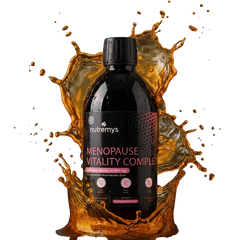
Menopause Vitality Complex
Our concentrated liquid formula combines hydrolyzed marine collagen, red clover isoflavones, magnesium, and B vitamins to support hormonal balance and reduce the intensity of hot flashes. Designed for women aged 40 to 60, it works deeply, not superficially.
Discover Menopause Vitality Complex →Frequently Asked Questions about Hot Flashes
📚 Scientific Sources
- Freeman EW et al. “Duration of menopausal hot flushes and associated risk factors.” JAMA Internal Medicine, 2015. Read the study
- Freedman RR. “Menopausal hot flashes: mechanisms, endocrinology, treatment.” Journal of Steroid Biochemistry and Molecular Biology, 2014.
- Cray LA et al. “Symptom cluster associated with menopausal hot flashes and night sweats.” Menopause, 2010.
- Lethaby A et al. “Phytoestrogens for menopausal vasomotor symptoms.” Cochrane Database of Systematic Reviews, 2013. Read the review
- Borrelli F, Ernst E. “Alternative and complementary therapies for the menopause.” Maturitas, 2010.
- EFSA Panel on Dietetic Products, Nutrition and Allergies. “Scientific opinion on the safety of isoflavones from food supplements.” EFSA Journal, 2015. Read EFSA opinion
- Stearns V et al. “Hot flushes.” The Lancet, 2002;360(9348):1851-1861.
This article is for informational purposes only and does not replace medical advice. For intense, persistent, or unusual symptoms, consult your doctor or gynecologist.

Gynecologist practicing in Paris for 18 years, specialized in women's hormonal health, perimenopause and menopause. At Nutremys LAB, she brings her medical perspective to every product we offer.
Learn more →


The information shared on this blog is for educational and informational purposes only. It does not replace medical consultation, diagnosis or treatment prescribed by a healthcare professional. If you have symptoms, are undergoing treatment or are pregnant, consult your doctor before modifying your diet or starting supplementation. Nutremys LAB food supplements should not replace a varied, balanced diet or a healthy lifestyle.
