


At a glance
- Perimenopause precedes menopause by an average of 4 to 8 years.
- The most common first sign: irregular menstrual cycles.
- Symptoms arise from hormonal fluctuation, not a definitive deficiency.
- A hormone-free approach — nutrition, lifestyle, targeted supplementation — relieves many women.
- Marine collagen, magnesium, vitamin D, and omega-3s are among the most studied active ingredients.
What is perimenopause?
Perimenopause — literally "around menopause" — refers to the years during which your ovaries gradually slow down their hormone production. Contrary to popular belief, it's not a sudden drop: it's a fluctuation. Estrogen levels rise and fall unpredictably, which explains why symptoms come and go from month to month.
This nuance is essential. During perimenopause, your body is not yet constantly lacking estrogen: it's experiencing variations. It's precisely this instability that triggers hot flashes, mood swings, and restless nights. Understanding this mechanism changes everything, as it opens the door to solutions that support the transition rather than fight it.

When does perimenopause start and how long does it last?
Perimenopause most often begins between 40 and 47 years of age, but it can start as early as 38 in some women. Its duration varies greatly: 4 to 8 years on average, sometimes more. Natural menopause then occurs around 51 years of age in France.
Several factors influence this timeline: genetics (your mother's age at menopause is a good indicator), smoking — which advances menopause by one to two years — as well as certain medical histories. If your periods become irregular before age 40, talk to your doctor: this is considered early menopause, which requires specific monitoring.
Symptoms of perimenopause
The symptoms of perimenopause are numerous and affect each woman differently. Here are the most frequently reported, and what lies behind each of them.
The very first sign: periods that are closer together, further apart, lighter, or heavier.
Linked to sudden estrogen variations that disrupt the brain's thermostat.
Fragmented sleep and daytime fatigue, often amplified by night sweats.
Irritability, anxiety, difficulty concentrating and memory issues.
Loss of firmness and elasticity: decreasing estrogen reduces skin collagen synthesis.
Redistribution of fat to the abdomen and more frequent joint stiffness.
Good news: the vast majority of these symptoms are manageable. They don't signal decline, but readjustment. For a detailed review of hormonal manifestations, consult our gynecologist's advice on symptoms.
Relieving perimenopause without hormones
Many women cannot or do not wish to use hormone replacement therapy (HRT) — due to personal choice, caution, or medical history (hormone-dependent cancers, for example). The good news: a hormone-free approach can significantly improve daily life.
Phytoestrogens or clean label: do you have to choose?
Phytoestrogens (soy, red clover) weakly mimic estrogen action and provide relief for some women. However, they are not suitable for everyone, especially in cases of sensitive hormonal history. This is why a growing number of women prefer a "clean label" approach, without hormones and controversial phytoestrogens: magnesium, vitamins, omega-3s, and collagen, which act on comfort without interfering with hormonal balance.

Nutrition and supplements: what does science say?
Among dietary supplements for menopause, certain active ingredients stand out for their level of evidence. The goal is not to take a lot of pills, but to target what really matters during the transition.
The high-dose liquid form offers an advantage: superior bioavailability to capsules or powders, for active ingredients that are actually assimilated. A formula designed for this period ideally combines dosed marine collagen, synergistic active ingredients, without hormones, without added sugar, and manufactured in Europe under GMP standards — exactly the specifications for a clean and serious supplementation. To delve deeper into the role of collagen, read our complete guide to marine collagen & menopause.

Signs you might benefit from supplementation
Supplementation is not always necessary. But certain signs indicate that targeted nutritional support could help you better navigate this transition:
| Sign | What it might reflect |
|---|---|
| Persistent fatigue | Increased needs for magnesium and B vitamins. |
| Sagging skin, brittle nails | Decrease in collagen synthesis linked to estrogen. |
| Fragmented sleep | Nervous support and magnesium often insufficient. |
| Joint stiffness | Joint comfort to be supported with collagen and omega-3. |
| Unbalanced or restrictive diet | Potentially limited micronutrient intake. |
If several of these signs resonate with you, a formula designed for this transition can make a difference — always as a complement, never as a replacement, to a good lifestyle. Also discover our essential supplements after 50 and the role of vitamin D3.
A transition deserves a formula to match
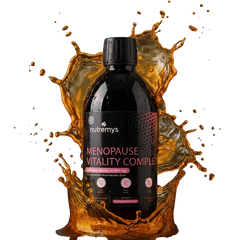
Menopause Vitality Complex: high-dose liquid marine collagen, synergistic active ingredients, hormone-free and sugar-free, manufactured in Europe.
Discover Menopause Vitality ComplexFrequently Asked Questions about Perimenopause
What is the difference between premenopause, perimenopause, and menopause?
Premenopause refers to the entire reproductive life before the first changes. Perimenopause is the transitional phase, marked by irregular cycles and symptoms. Menopause is confirmed after 12 consecutive months without periods. In short: perimenopause = transition, menopause = culmination.
What are the first signs of perimenopause?
The very first sign is generally a change in the menstrual cycle: periods that are closer together, further apart, or with variable flow. Hot flashes, sleep disturbances, fatigue, mood swings, and less firm skin often follow.
Can perimenopause be relieved without hormones?
Yes. An adapted lifestyle (physical activity, sleep, protein-rich diet), combined with targeted supplementation without hormones or controversial phytoestrogens — magnesium, vitamin D, omega-3, marine collagen — relieves many women. This is the preferred option for those who cannot or do not want HRT.
Which supplement to choose for perimenopause?
Opt for a formula that is transparent about its dosages, hormone-free, sugar-free, and manufactured in Europe under GMP standards. High-dose liquid formats offer better bioavailability. Look for a synergy of active ingredients (marine collagen, magnesium, vitamins, omega-3) rather than a single isolated active ingredient.
How long does perimenopause last?
On average 4 to 8 years, with great individual variations. It most often begins between 40 and 47 years old and ends at menopause, around 51 years old in France. Some women go through it in two years, others in ten.
Scientific Sources
- EFSA — Scientific opinions on health claims (vitamin D, magnesium, B vitamins).
- World Health Organization (WHO) — Data on menopause and women's health.
- HAS — Recommendations on menopause management.
- Brincat M. et al., Maturitas — Estrogens and skin collagen during menopause.
- NICE Guidelines — Menopause: diagnosis and management.
This article is for informational purposes only and does not replace medical advice. Consult a healthcare professional for any personal questions.
The information shared on this blog is for educational and informational purposes only. It does not replace medical consultation, diagnosis or treatment prescribed by a healthcare professional. If you have symptoms, are undergoing treatment or are pregnant, consult your doctor before modifying your diet or starting supplementation. Nutremys LAB food supplements should not replace a varied, balanced diet or a healthy lifestyle.
